
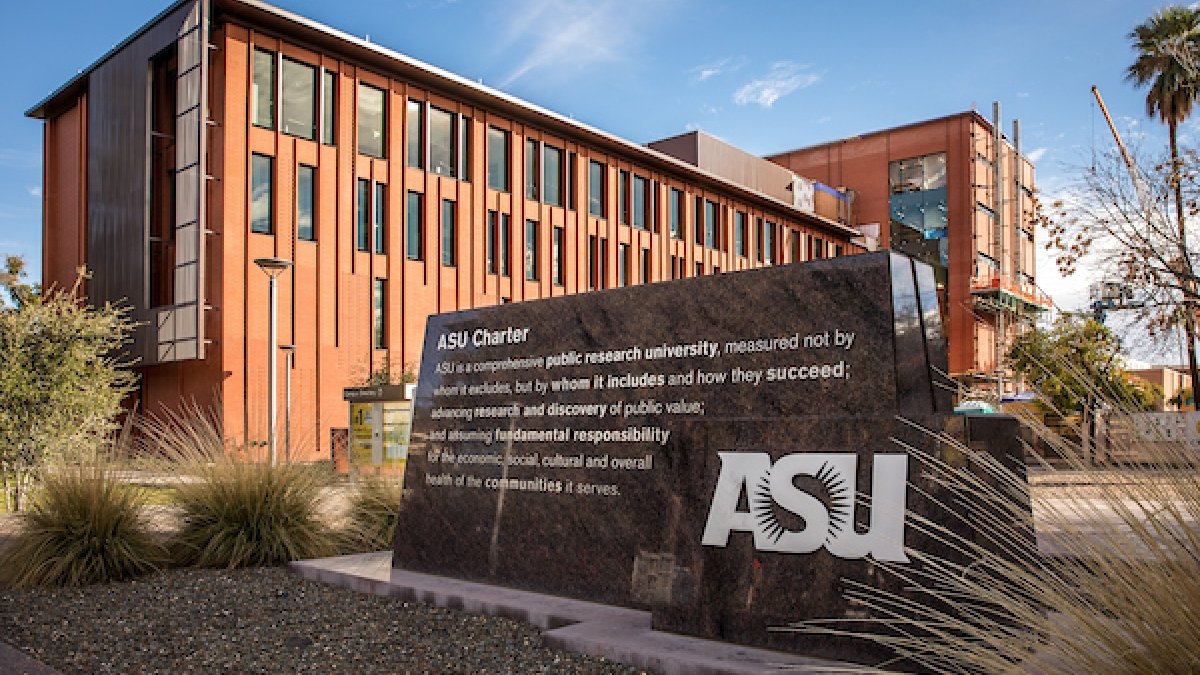
Below is a structured, sourced, and up-to-date overview of Arizona State University (ASU) in major global and U.S. ranking systems, what those ranks mean, subject / specialty strengths, recent trends, and practical guidance for students and researchers who care about rankings.
Executive summary — the headline numbers (latest available)
- QS World University Rankings (2026): ASU is #173 globally (moved up from ~#200 in 2025) and is placed among the top ~35–40 U.S. institutions in QS’s U.S. subset.
- Times Higher Education (THE): ASU is listed among THE’s ranked institutions and is recognized especially highly for Sustainable Development Goals (SDG) performance (THE SDG rankings: ASU ranks first in the U.S. and top globally on several SDGs).
- Academic Ranking of World Universities (ARWU / Shanghai Ranking, 2025): ASU appears in the 151–200 global band in ARWU 2025.
- Center for World University Rankings (CWUR, 2025): ASU’s CWUR world rank is ~196 (CWUR publishes a single-number global rank)
- U.S. News & World Report (Best Colleges / Best Global Universities, 2025–2026): ASU has been named the No. 1 “Most Innovative” university in the U.S. for multiple consecutive years (11th straight year in the 2026 U.S. News list) and its overall U.S. placement in the 2026 Best Colleges list is in the ~low-100s nationally (U.S. News overall tie at #117 in 2026 reporting).
What each ranking is measuring (methodology highlights)
- QS World University Rankings emphasize academic reputation (large-scale survey), employer reputation, faculty/student ratios, citations per faculty, and internationalization metrics. QS is reputation-weighted and sensitive to survey responses and citation outputs.
- Times Higher Education (THE) uses five broad pillars: teaching, research, citations, industry income, and international outlook. THE also publishes SDG-focused rankings that evaluate impact on the UN Sustainable Development Goals.
- ARWU / ShanghaiRanking is strongly research/output focused: Nobel/Fields awards, highly cited researchers, papers in Nature/Science, and citation indices drive placement; ARWU reports ASU in the 151–200 band (2025).
- CWUR uses outcomes such as quality of education (alumni success), alumni employment, faculty quality (awards), research output, and citations to produce a single global rank.
- U.S. News & World Report (U.S. Best Colleges) uses indicators including graduation and retention rates, social mobility, faculty resources, expert opinion, and student outcomes. U.S. News also has a separate Best Global Universities ranking that focuses on research performance and reputation.
Recent trends & notable strengths (what explains ASU’s placements)
- Rapid QS improvement and broad upward momentum. QS moved ASU up (QS 2026: #173 globally; improved from near #200), reflecting gains in citations, research impact, and reputation surveys. ASU’s modular research growth and emphasis on interdisciplinary programs helps here.
- Innovation & employability. U.S. News has repeatedly labeled ASU the nation’s most innovative university — an institutional brand that influences reputation surveys and employer perception. ASU also scores well on employability/graduate outcomes in some employability rankings.
- Strong subject / program rankings. While overall global positions vary by list, ASU is top-ranked in several subject areas (e.g., management, library & information science, law in subject-level lists; and strong interdisciplinary science standing). ARWU and subject rankings list specific high-performing subjects.
- Impact / SDG leadership. THE’s SDG rankings place ASU at or near the top in the U.S. (and high globally) for performance on sustainability, community engagement, and other SDGs — a strength not directly captured by research-only rankings.
Detailed breakdown (by ranking system)
QS (TopUniversities / QS World University Rankings 2026)
- Global: #173 (QS 2026).
- U.S. position (rough proxy): Approximately top-40 among U.S. universities in QS’s U.S. subset for 2026.
- Why: Improvements in citations per faculty, employer reputation scores, and steady gains in research outputs.
Times Higher Education (THE)
- Global and U.S. placement: THE’s overall table places ASU among the broader group of well-ranked universities; more distinct is ASU’s very high SDG rankings — e.g., first in the U.S. and top positions globally on several SDGs (e.g., Life Below Water, Sustainable Cities and Communities).
- Why it matters: THE’s SDG lists highlight universities’ societal and sustainability impact beyond classical research metrics.
ARWU / ShanghaiRanking (Academic Ranking of World Universities, 2025)
- Global: 151–200 band (2025 ARWU).
- Why: ARWU is heavily weighted to high-end research indicators (Nobel/Fields, highly cited researchers, papers in Nature/Science). ASU’s large, multidisciplinary research portfolio places it solidly within the top ~200 research universities worldwide.
CWUR (Center for World University Rankings, 2025)
- Global: ~196 (CWUR 2025 single-number rank).
- Why: CWUR emphasizes alumni outcomes and research indicators; ASU’s size and alumni influence boost performance but the university sits behind many older private research universities and top public flagships in raw metrics here.
U.S. News & World Report (U.S. Best Colleges / Best Global Universities)
- U.S. Best Colleges (2026): ASU is ranked ≈#117 (tie) nationally in the U.S. News 2026 Best Colleges list and is again named No. 1 “Most Innovative” in the U.S. (11th consecutive year).
- Best Global Universities: U.S. News’ global list emphasizes research reputation and output; ASU appears among the globally ranked research universities (placement varies year to year).
How to interpret differences across rankings (practical notes)
- Different aims → different outcomes. ARWU and CWUR are research-heavy and favor long histories of high-impact research. QS and THE blend reputation and research, giving ASU room to show gains when reputation and research output rise. U.S. News focuses on undergraduate metrics, retention, student outcomes, and some reputation measures.
- Size & mission matter. ASU is a very large public research university with multiple campuses and a strong emphasis on access, innovation, and interdisciplinary work. That model tends to increase measures like graduation volume, employability, SDG impact, and applied research, while in some reputation or per-faculty measures it competes differently with smaller, more exclusive institutions.
- Subject rankings may outshine overall rank. If you care about a specific program (e.g., engineering, business, law, information science), check subject-level rankings: ASU often ranks higher in particular subjects than its overall world rank suggests.
Prospective student / researcher takeaways
- If you value employability & innovation: ASU performs very strongly (employer perception, innovation awards, and employability surveys). U.S. News and employability rankings praise ASU’s innovation and graduate readiness.
- If you prioritize top-tier basic research prestige (Nobel/Fields style signals): ARWU and CWUR place ASU lower than the handful of elite research powerhouses; for those specific research prestige markers, older Ivy/West Coast/UK/European institutions often dominate.
- If you want strong subject programs or interdisciplinary science: ASU’s focused strengths (management, information science, interdisciplinary science and sustainability) make it competitive and sometimes top-ranked in subject lists.
Quick checklist for verifying and using rankings
- Match the ranking to your priority (global reputation vs. specific program strength vs. employability vs. societal impact).
- Look at subject-level lists as much as overall rank — many students find program rankings more useful.
- Consider methodology (e.g., surveys → reputation bias; citation focus → research bias). Use the methodology pages on each ranking site for details.
Sources (selected, load-bearing)
- ASU university news & press about QS 2026 placement and QS improvements.
- QS / TopUniversities coverage (QS World University Rankings 2026 overview).
- ARWU / ShanghaiRanking page and ARWU methodology PDF (Academic Ranking of World Universities 2025).
- CWUR 2025 page with ASU ranking details.
- Times Higher Education (THE) pages and THE SDG ranking coverage for ASU.
- U.S. News / reporting on ASU’s “Most Innovative” distinction and Best Colleges placement.
Short conclusion
Arizona State University is a rising, high-impact public research university whose strengths are most visible in innovation, employability, interdisciplinary research, sustainability/SDG impact, and particular subject areas. Depending on which ranking you consult, ASU sits roughly between the top ~150–200 worldwide (ARWU / some lists) and the top ~170–200 range (QS 2026: #173), with specific subject ranks and SDG performance often much stronger than the headline overall position. For students and faculty, the practical decision should weigh program-level strength, career outcomes, and fit with ASU’s mission more than an overall single-number rank.